
THEMIS Solar Telescope
|
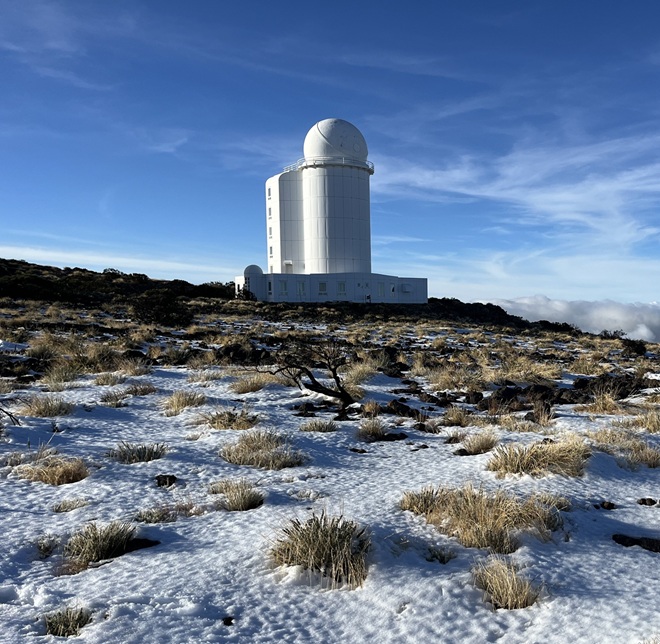
The “Télescope Héliographique pour l’Étude du Magnétisme et des Instabilités Solaires” (THEMIS) of CNRS-INSU is a 1-meter-class optical solar telescope, primarily dedicated to studying solar magnetism and the dynamical processes within the Sun’s atmosphere (such as sunspots and solar flares). THEMIS can also perform observation of near-Sun objects such as Mercury and comets. THEMIS is located at the Teide Observatory of IAC, with a base office in La Laguna, in Tenerife, Canary Islands, Spain. New ¡¡¡ 2026 observing campaign schedule !!!
March : Participation of THEMIS at the "10th Solar Orbiter Scientific Workshop" in Berlin (FR). Click for information on: How to reach THEMIS locations ; How to contact the THEMIS team |
|
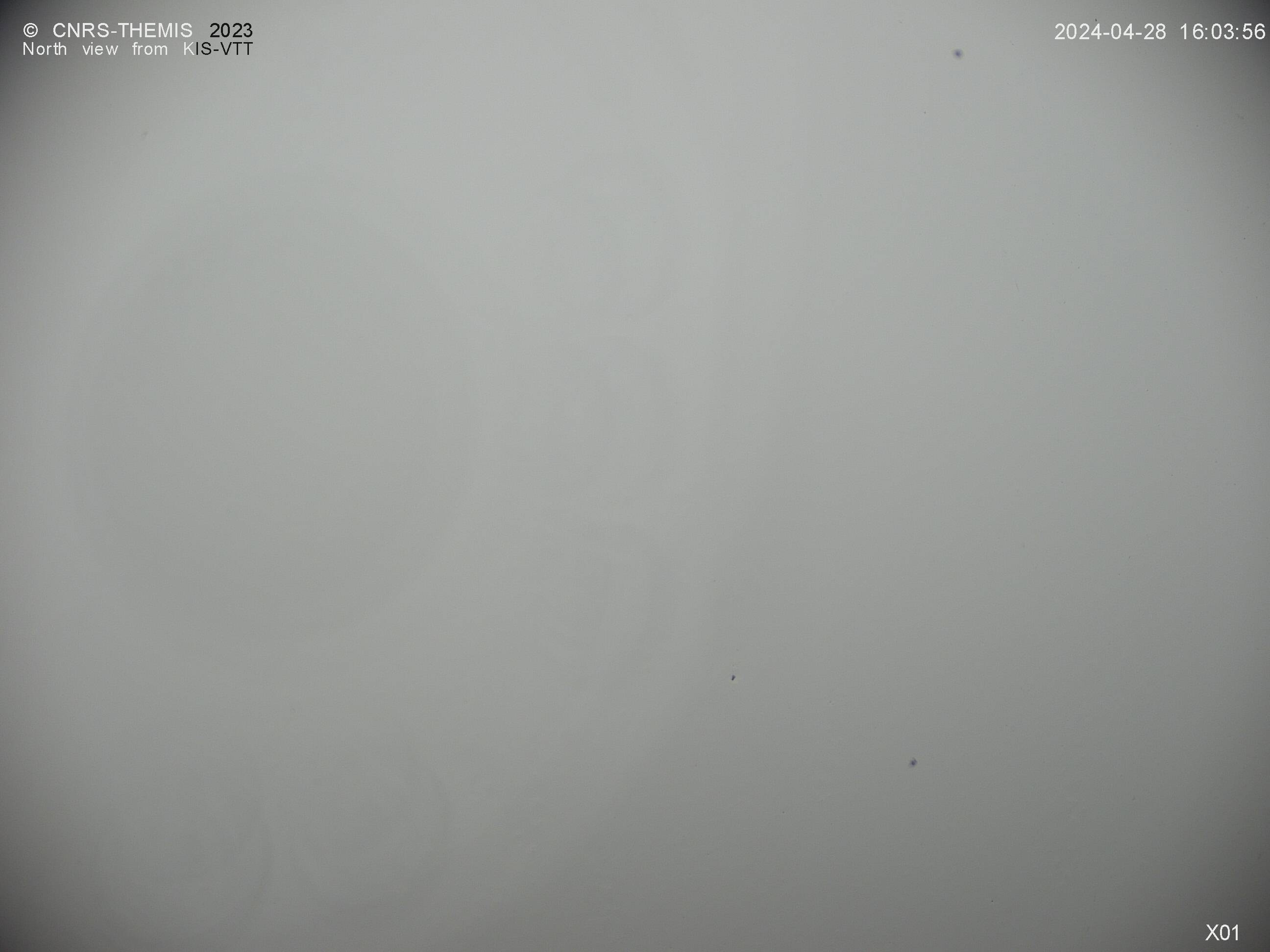
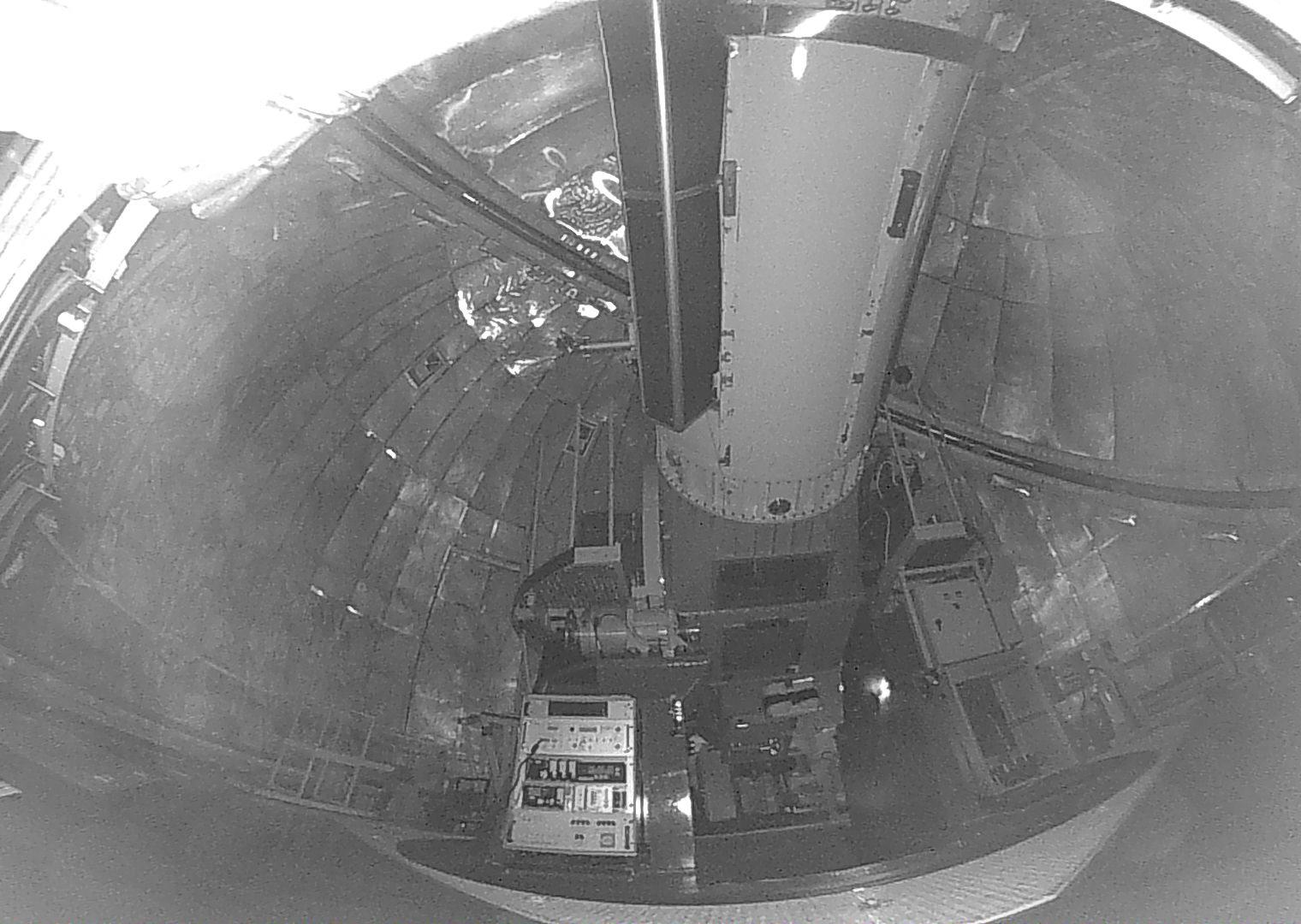
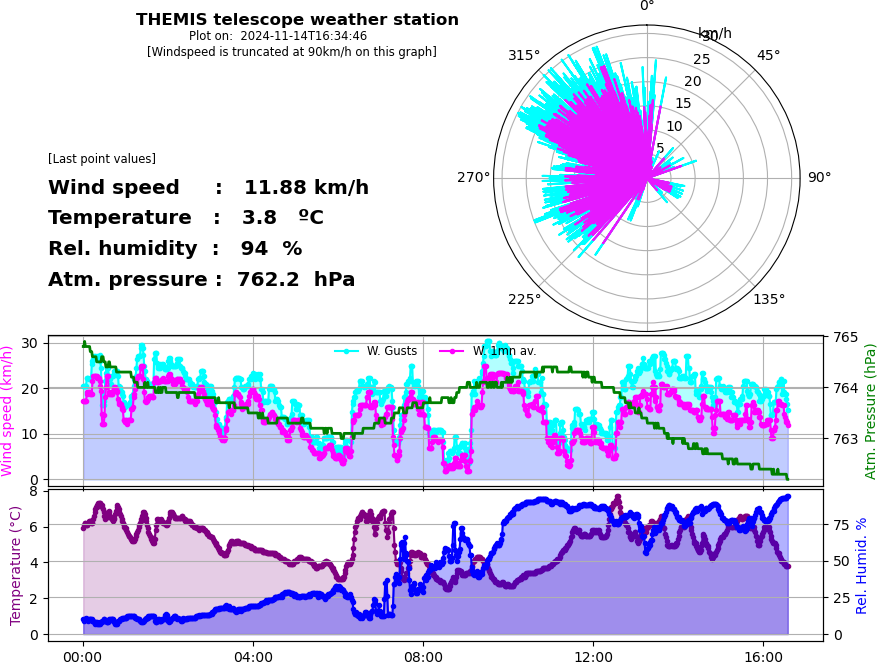
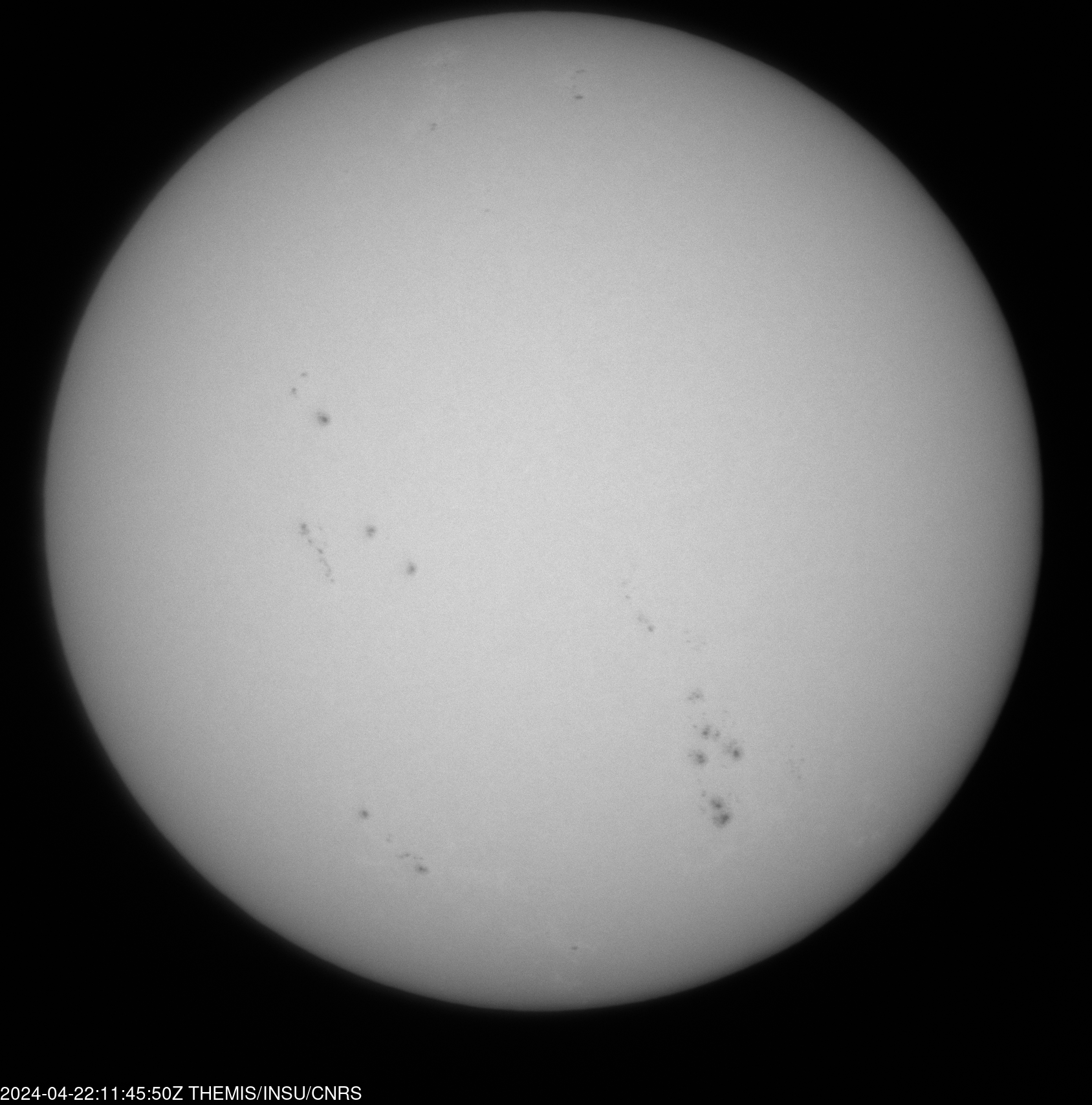
Overview of telescope status
|
|
|
The THEMIS telescope and its science
Technical & scientific information about THEMIS
THEMIS scientific objectives
THEMIS administrative structures
Observing with THEMIS
Information for research scientists wishing to observe with THEMIS
2026 observing campaign
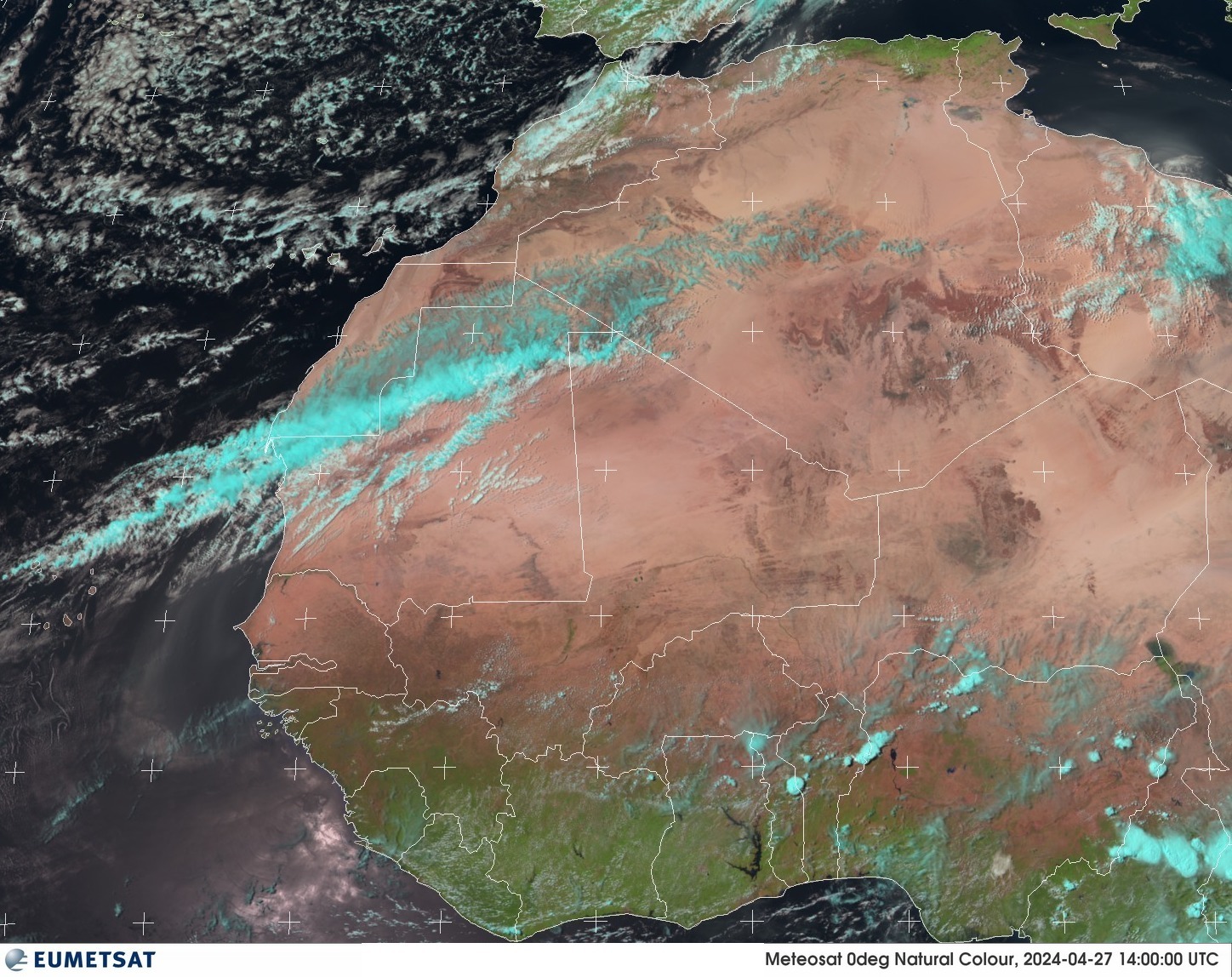
Weather at THEMIS location and weather forecast
THEMIS data products & data access
THEMIS Scientific research & results
Scientific research with THEMIS
THEMIS scientific highlights and news
THEMIS observations and media galleries
Media resources (Posters, logos, ...)
THEMIS image of the month: April 2026
|
|
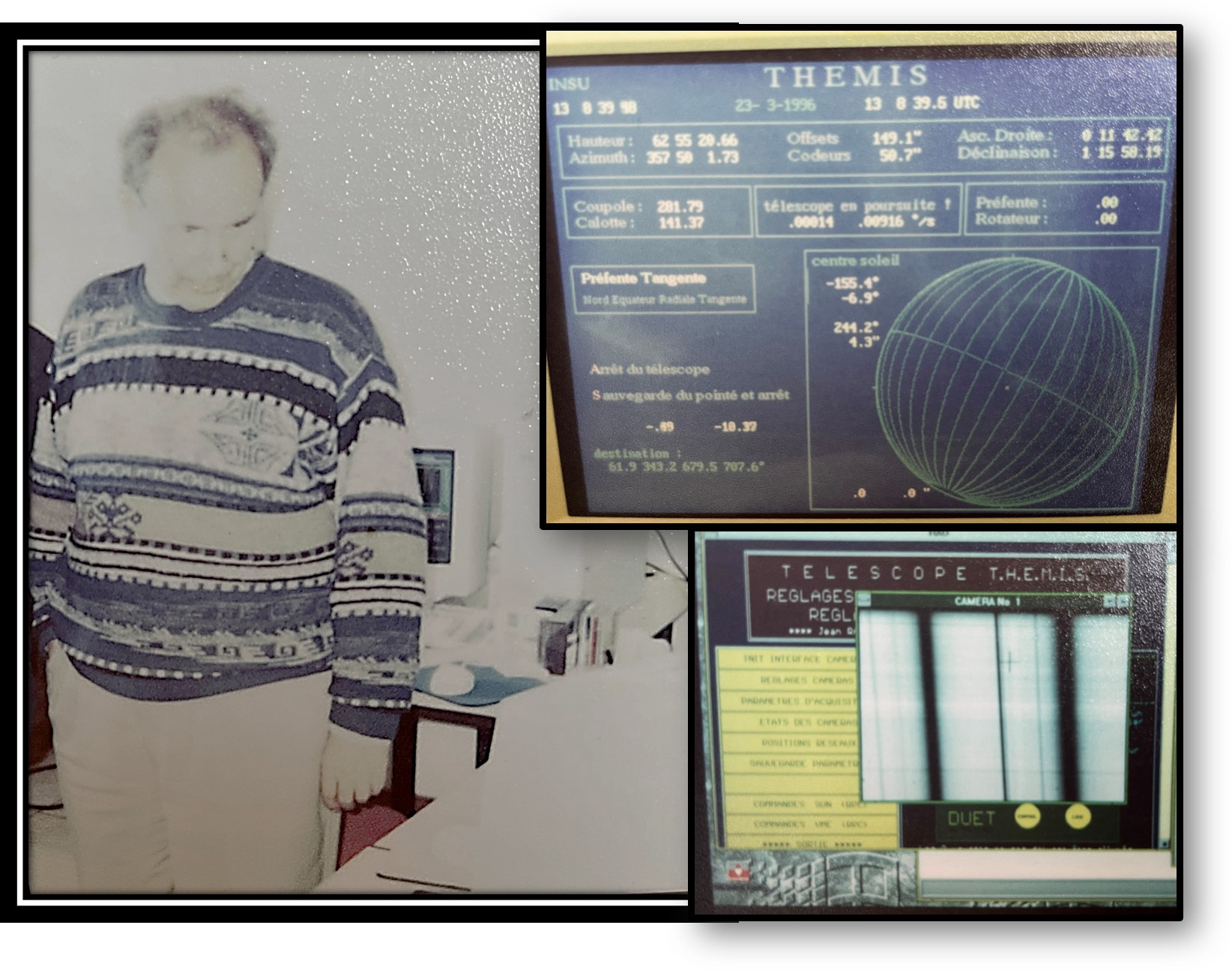
Thirty years ago, in March 1996, THEMIS witnessed its first light. For the first time, THEMIS targeted and tracked the Sun (upper right image of THEMIS tracking software, still in used today). THEMIS long-slit spectrograph acquired its first solar spectral images (bottom right image). This key moment was a pivotal point marking the transition of the end of the development of the project toward the start of its scientific exploitation. It crowned a twenty year effort, which started in the middle of the 1970's, for the construction of what is still the largest French solar telescope, and one of the world-largest one. The construction and design of the THEMIS telescope was led by J. Rayrole (picture on the left taken for the 1st light) along with P. Mein and M. Semel, the three “founding fathers” of THEMIS. |
THEMIS telescope management
Internal pages for the THEMIS team
Previous THEMIS front page
© 2026 CNRS-THEMIS
Terms of use: unless otherwise specified, all graphical (webcam records, movies, pictures) or non-graphical material (text) from this site is property of CNRS-THEMIS under a Creative Commons CC-BY 4.0 license.


